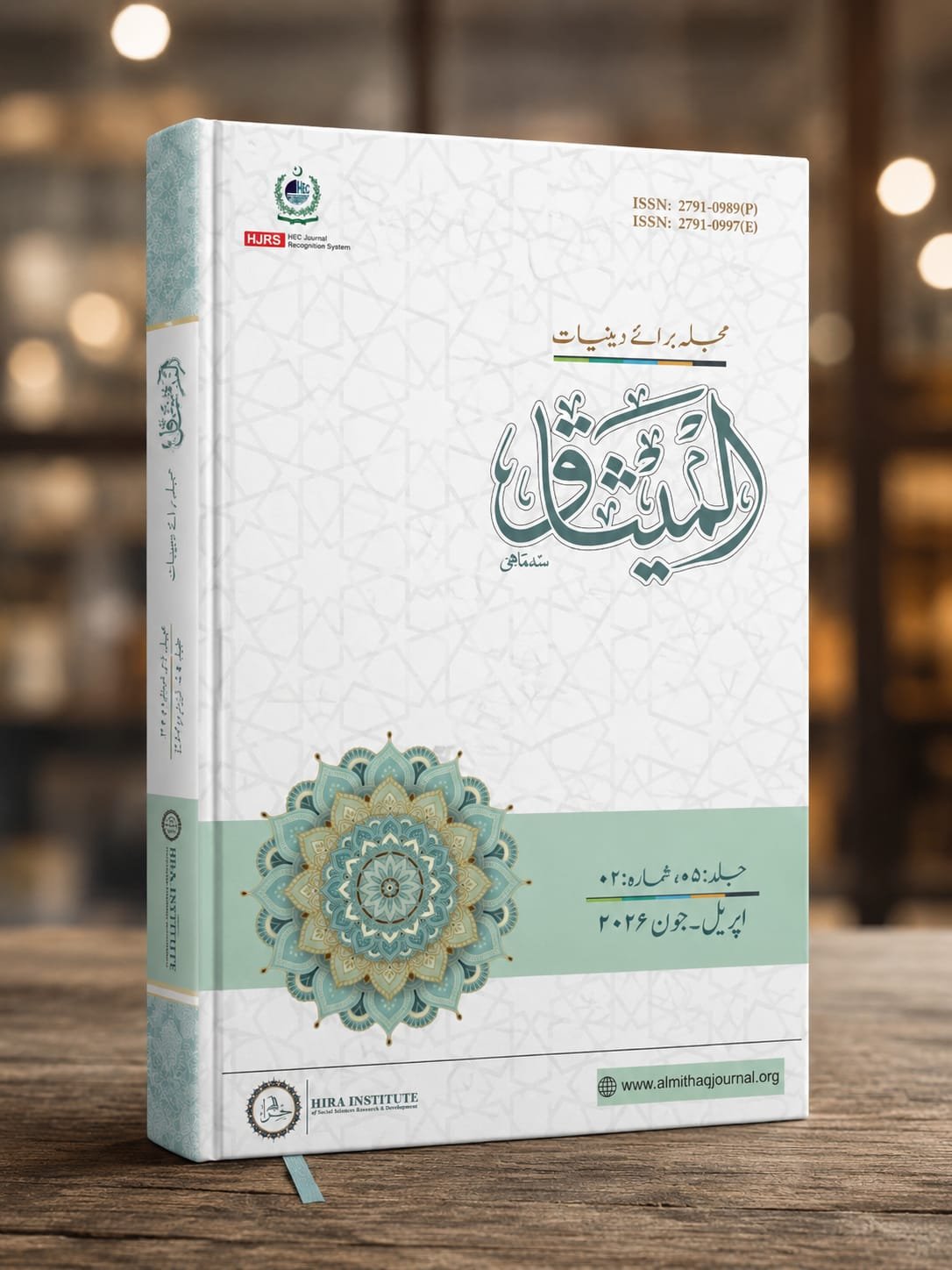
The Juristic and Legal Status of Qawl Shādh (Anomalous Opinion): An Analytical Study of the Criteria for Its Identification and Ethical Boundaries
قولِ شاذ کی اصولی و فقہی حیثیت : شناخت کے معیارات اور اخلاقی حدود کا تحلیلی جائزہ
DOI:
https://doi.org/10.63283/Keywords:
Qawl al-Shādh, Islamic Jurisprudence, Legal Methodology, Fatwa, Ikhtilāf, Ijmāʿ, Maqāṣid al-Sharīʿah, Islamic Legal Ethics, Juristic AuthorityAbstract
The concept of Qawl al-Shādh (an irregular or isolated juristic opinion) occupies a significant position in the discourse of Islamic jurisprudence, particularly in relation to legal authority, juristic methodology, and the preservation of consistency in Islamic legal rulings. Although Islamic law recognizes scholarly disagreement (ikhtilāf) as an inherent feature of juristic reasoning, not every opinion possesses equal legal weight or qualifies for fatwa and judicial application. The identification of Qawl al-Shādh has therefore remained a crucial concern among classical and contemporary jurists, as its misuse may lead to legal inconsistency, ethical deviation, and the distortion of Sharīʿah objectives.This study critically examines the juristic and legal status of Qawl al-Shādh by exploring the principles employed by classical jurists to distinguish it from valid juristic disagreement. It analyzes the major criteria adopted by the four Sunni schools of law, including conformity with the Qur'an and Sunnah, juristic consensus (ijmāʿ), established legal principles, and the objectives of Islamic law (Maqāṣid al-Sharīʿah). The study further investigates the ethical boundaries governing the citation, adoption, and dissemination of irregular opinions, particularly in contemporary legal and social contexts where selective reliance on anomalous views may undermine legal certainty, public interest, and religious integrity.Adopting a qualitative and analytical methodology, this research is based on classical juristic literature, principles of uṣūl al-fiqh, and contemporary scholarly discussions. It argues that while Qawl al-Shādh retains academic value for comparative legal analysis and juristic development, it generally lacks normative authority for issuing fatwas or judicial rulings unless supported by compelling textual evidence or overriding public necessity recognized within the framework of Islamic legal theory.The study concludes that a sound understanding of the identification criteria and ethical limitations of Qawl al-Shādh is essential for preserving methodological integrity, promoting responsible legal reasoning, and preventing arbitrary or selective interpretations of Islamic law. The findings contribute to contemporary discussions on Islamic legal methodology by providing a balanced framework for evaluating minority juristic opinions while safeguarding the objectives and coherence of the Sharīʿah.